Friday, March 12, 2010

Early Christian and Byzantine

Early Christian and Byzantine portraiture represent a continuation and break form the past.  Fayum portraits were panel paintings placed of the heads of mummies. They tied the past and present together as one. In the Ravenna Portrait of Justinian it shows past and present. It shows all different types of people holding different things. They have shields and  other things that fit them. The Fayum Portraits show ancient Egypt and Britian ideas into one painting. They got tied together as one.  This is how they show a continuation and break from the past. 


"File:Meister Von San Vitale in Ravenna 003.jpg -." Wikipedia, the Free Encyclopedia. Web. 12 Mar. 2010. .

Who Was Augustine of Hippo

Augustine of Hippo was born in 354 and died in 430. He was a bishop in Hippo, North Africa. His is the bishop all the way through until is death.  He also teaches and writes. He study in philosphy and become a philospher. He "established anew the ancient faith." He is a doctor of the church. 

image from: wikimedia commons 

Marcus Aurelius's Meditations and Thanks

Mom, 
Thank you for everything. You have taught me how to be who I am. You taught me to be polite and respectful, and how to survive as a teenage girl. You are always there for me and taught me how to do many things.


Dad, 
Thank you for teaching me everything from learning to ride a bike to teaching me to be a good person all around. 


Matt, Gavin, and Colin,
Thank you for teaching me to be a tougher, stronger person. You guys have taught me how to stick up for myself and be stronger, because of you guys I am not affected by teasing like I used to be. 


Dino,
Thank you for teaching me to be polite. You taught me how to be a proper young lady. To this day whenever I put my napkin on my lap I think of you because this is one thing you have always taught me to do. 


Mr. Twigg, my 8th grade english teacher, 
Thank you for making english easier for me. You have taught me everything i know about writing and because of you my writing skills have improved a lot. What you taught me I have used all the time since they day you taught me and will be carried with me the rest of my life. 


"The Internet Classics Archive | The Meditations by Marcus Aurelius." The Internet Classics Archive: 441 Searchable Works of Classical Literature. Web. 12 Mar. 2010. .
http://commons.wikimedia.org/wiki/File:Young_Marcus_Aurelius_Musei_Capitolini_MC279.jpg


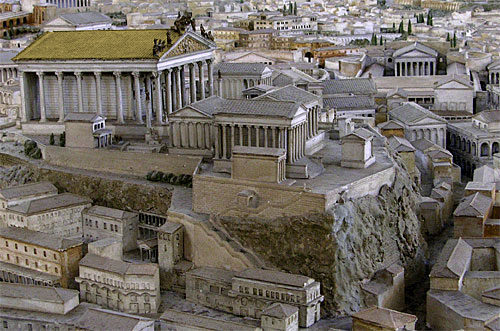
Pictures from The Deeds of The Divine Augustus


Chalcidicum
flickr.com 
Forum of Julius 
Jupiter Optimus 
Jupiter Tonans 
Lupercal 
Palatine Hill
Flickr
Temple of Apollo
flckr.com
Temple of Castor
Temple of Julius
flickr.com
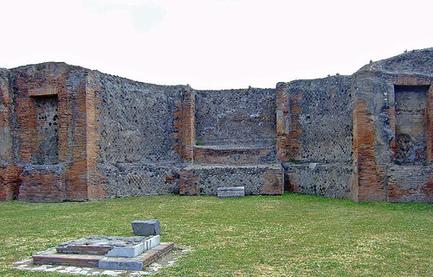
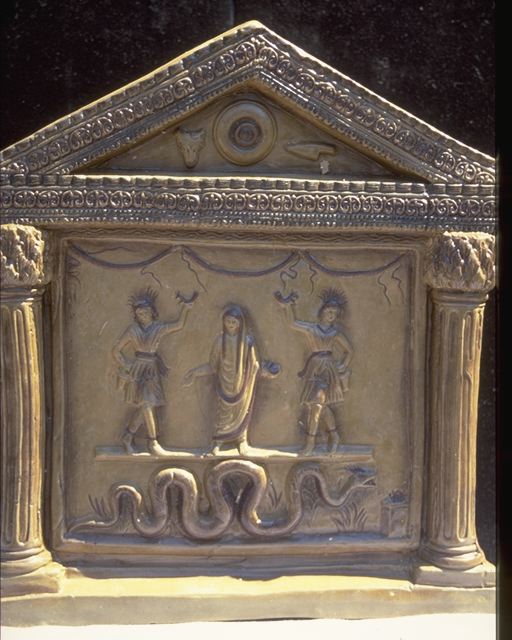
Temple of Lares
Temple of Mars Ultor
Temple of Minerva 
Temple of Penates 
Temple of Vesta
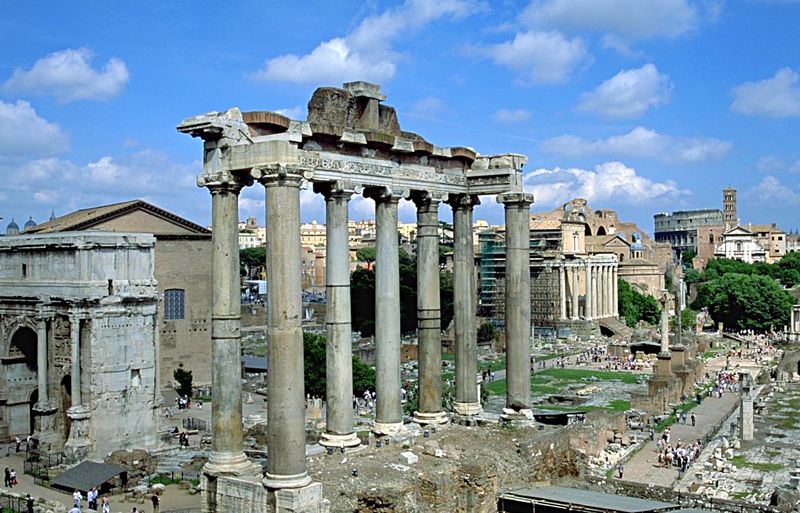
Temple of Saturn 
Theater of Pompey

Tuesday, March 9, 2010

History Notes

Linear History
Timeline
Events


Cyclic History
Is a theory which dictates that the major forces that motivate human actions in a cycle.
Events occur in a cycle

Hegelian Theory of History
Hegel
German philospher
Wrote book the philosophy of history
Thesis + Antithesis= Synthesis

Event 1. John, the stongest kid in class, doesn’t tie his shoes + Event 2. John picks on group of kids, bullying them

Event number three= john chases the kids, but slips out of his shoe.

Event 1. john sprains his ankle  + Event 2. john gets jumped on the way home from school.

Event 3.=john is really hurt

Event 1. John goes to the hospital+  Event 2. John is now on crutches for his ankle

Event 3. John goes to a bullying class and ties his shoes in a double knot now


Vortex/ Vortextual History
Yeats was an irish poet
Gyer tornado work from going bi to going small
Yeats thought that history was like a gyer with a mirror
He thought events go big and then go small
Never the same thing
Events are always changing


 Hunter Gathers were Nomads
Hunter Gatherers- follow food
Nomads- constantly moving have no real place to stay
Mesolithic Period
Neolithic Period
Domesticate animals
Gather food
Agriculture
Architecture
Art work began
People began to settle down and cities formed
People moved northwest to get closer to the water
Major cities are all near water except las vegas
Trading items for food or food for food
You work at what you do best and become rich when you are really good at something
Government is needed in the cities now
Everything starts to develop when people settle in one place


Egypt Notes

Paleolithic Cultures
Neolithic Cultures
Egypt is split into two parts:
Upper
Lower
Nile River splits in in two
Northern Part of Egypt was considered lower Egypt because of the way the Nile flowed

Narmer Pallette :
Wears crown like thing to show unity
Forceful
Old Kingdom:
First of the dynasty begins
A sucession of kings and rulers by birthright
You know your looking at a real Egyptian statue because there will not be a gap between their legs
Great pyramids at Giza
Pryamids of ________,_____________,_________
Covered with limestone
Did slaves build pryamids?
Hired workers did it not slaves
Mortuary cities-pyramid cities
Ami book focuses on death
Death is very important in Egyptian culture
Nationalgeographic.com/pyramids
People who worked on pyramids were part of concscription